


The Back Pain Signs Your Mattress Shouldn’T Ignore
Overview
Waking with aches across your lower back is easy to dismiss as a bad night’s sleep, a stressful week, or simply getting older. Yet in many bedrooms, the real issue sits right beneath you. A mattress that no longer supports your body properly can contribute to morning back pain, restless sleep, and a feeling of fatigue that lingers well into the day.
Your mattress plays a central role in how your spine rests for seven or eight hours at a time. When the surface is too soft, too worn, or unevenly compressed, your body can dip out of a neutral posture. Over time, that lack of support may make it harder to maintain healthy spinal alignment, especially if you already sleep on your side or back.
For many sleepers, the answer is not simply choosing the firmest bed available. The right mattress for back pain should balance structure with comfort, helping the shoulders, hips, and lower back settle evenly. A well-made orthopaedic mattress can be especially helpful when you need steadier support without sacrificing pressure relief.
When a mattress stops supporting your body evenly, your back often notices before the mattress looks obviously worn out
In the sections below, we will explore the most common signs of poor mattress support, why pressure points matter, and how a better sleep surface may help you wake feeling less stiff and more restored.
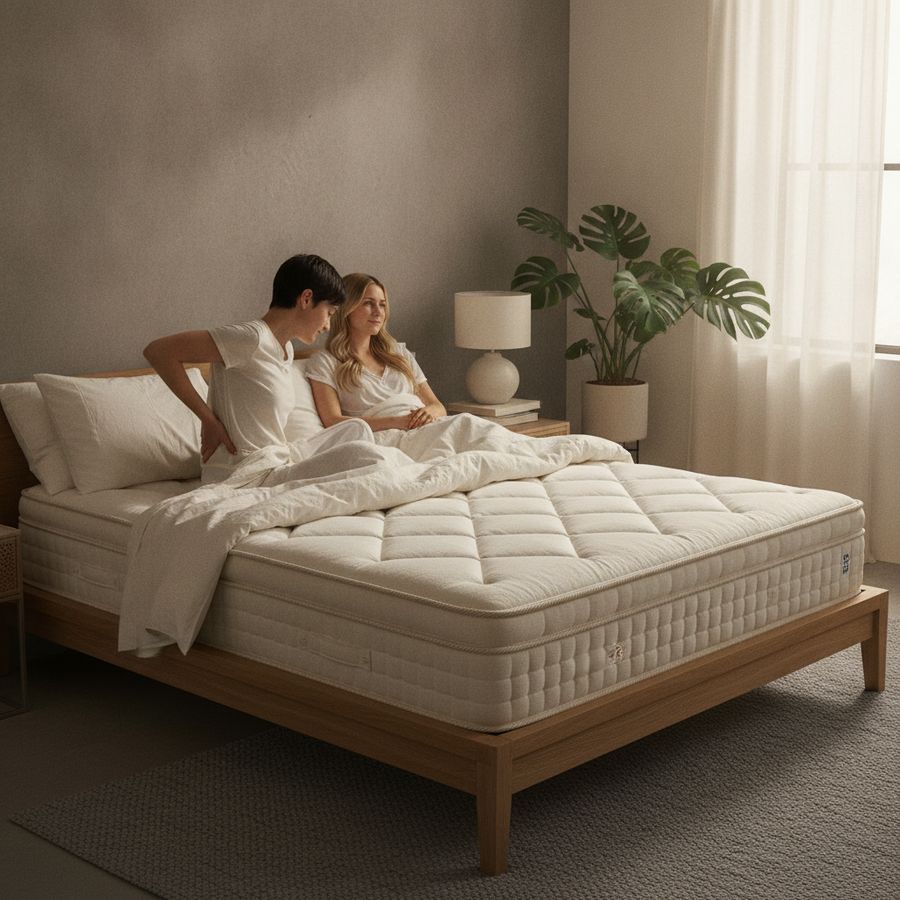
Poor Support Can Disrupt Spinal Alignment Nightly
Healthy sleep posture depends on your mattress keeping your body in a fairly neutral position from head to hips. That does not mean lying perfectly straight and rigid. It means your natural curves are supported so that the spine is not forced into an awkward bend for hours at a time. When poor mattress support lets your heavier areas sink too deeply, the lower back and pelvis often take the strain.
This matters because sleep is not a short event. If your body stays misaligned night after night, even mild stress on muscles and joints can add up. Side sleepers may find the hips dropping too far while the waist remains unsupported. Back sleepers may notice the lower spine arching if the mattress is too soft, or tension around the shoulders if it is too hard. In both cases, spinal alignment suffers.
A well-constructed mattress uses supportive layers to distribute weight more evenly. Pocket springs, orthopaedic support systems, and carefully chosen comfort fillings can all help create a more stable sleep surface. That is why many people searching for a mattress for back pain focus on support first and softness second.
Support is not about feeling hard; it is about keeping the body level, cushioned, and properly aligned through the night
If you regularly wake up feeling twisted, tense, or as though your back has worked while you slept, your mattress may be interfering with recovery instead of promoting it.
What Are the Signs of Weak Support?
Not every worn mattress shows dramatic damage straight away. In fact, some of the clearest warning signs are felt in your body before they are seen on the bed itself. If you are trying to decide whether your current mattress is still doing its job, pay attention to patterns rather than one isolated bad night.
Common indicators of poor mattress support include the following:
- Morning back pain that eases after you get up and move around
- A dipping or sagging area where you usually sleep
- Rolling toward the middle of the bed
- Feeling pressure under the hips, shoulders, or lower back
- Waking often to change position and get comfortable
- Better sleep and fewer aches when staying elsewhere
You may also notice that the mattress edges feel weaker, the surface seems uneven, or the comfort layers have compressed over time. These are all clues that support is no longer consistent across the bed. Even high-quality mattresses eventually wear, especially if they are older or not suited to your build and sleep position.
If your sleep has become more broken and your body feels worse in the morning than at bedtime, it is worth asking whether your mattress is still fit for purpose. An orthopaedic mattress or a more tailored support design may be a smarter long-term solution if you need firmer, steadier alignment at night.
Your mattress should help you forget about your body while you sleep, not remind you of every sore spot when you wake
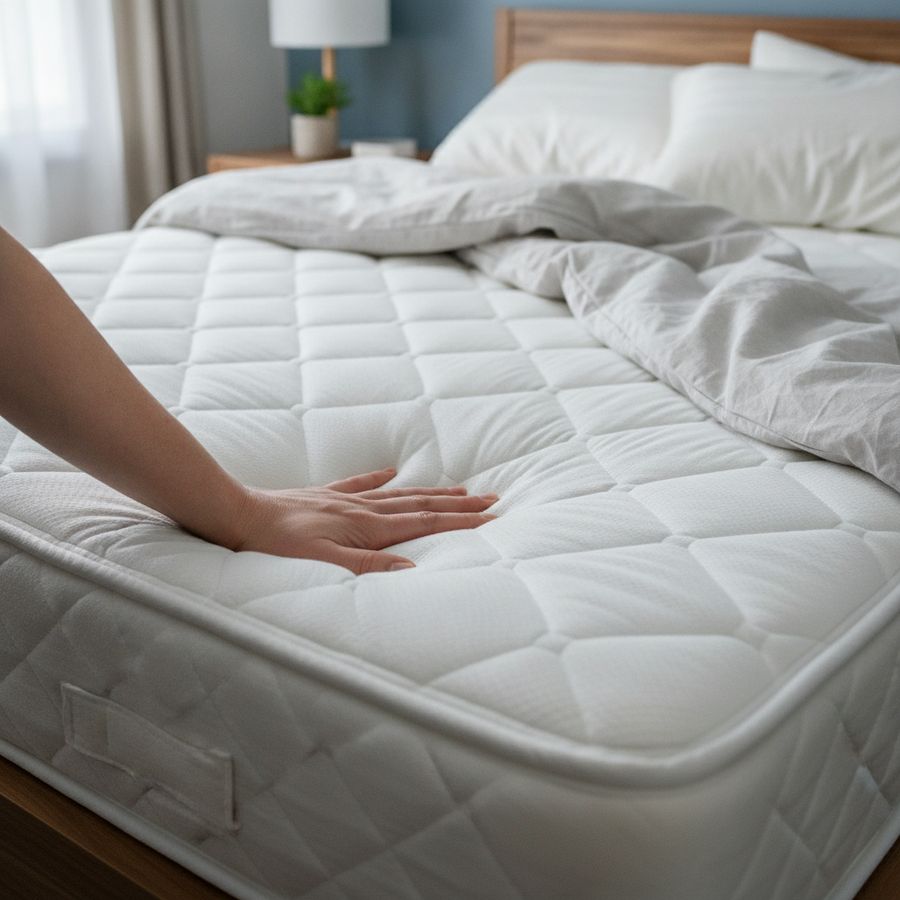
Pressure Points Often Trigger Morning Stiffness
Back discomfort is not always caused by obvious sagging alone. Sometimes the problem comes from the opposite issue: a mattress that creates too much concentrated force beneath certain parts of the body. These pressure points often build around the shoulders, hips, and lower back, especially when the comfort layers are too shallow, too firm, or no longer responsive.
When pressure is not relieved properly, the body tends to compensate by shifting position more often. That can interrupt deeper sleep and leave muscles feeling guarded and tense by morning. Many people describe this as waking up stiff rather than sharply painful. It may feel like your body never fully relaxed, even if you spent enough hours in bed.
A supportive sleep surface should cushion weight-sensitive areas while still keeping the spine stable. This is where design matters. Features such as individually responsive springs, pressure-relieving foam, and balanced upholstery can help prevent the body from bearing too much force in one place. The goal is not to sink dramatically, but to settle evenly.
If you are dealing with morning back pain, it is worth considering whether your mattress is forcing your body to brace against the surface all night. A better mattress for back pain often improves comfort by combining support with targeted pressure relief rather than choosing one at the expense of the other.
Less stiffness in the morning often starts with less pressure during the night
Can a Better Mattress Ease Back Pain?
In many cases, yes, a better mattress can make a noticeable difference. While a mattress is not a medical treatment, it can remove one of the most common sleep-related contributors to discomfort: poor support. If your current bed is sagging, uneven, or unsuited to your sleeping style, replacing it with a more supportive model may help reduce morning back pain and improve overall sleep quality.
The key is choosing a mattress that matches how your body sleeps. An orthopaedic mattress can be a strong option for people who prefer a firmer, more stable feel, particularly when lower-back support is a priority. For others, a mattress with pocket springs and pressure-relieving comfort layers may be more effective because it supports spinal alignment without creating hard pressure points.
Look for qualities such as:
- Consistent support across the full sleep surface
- Comfort layers that cushion without excessive sinkage
- Good edge support for a more stable feel
- Durable materials that hold their shape over time
- A firmness level suited to your sleep position and body weight
Handcrafted mattresses with thoughtful support systems can be especially valuable because they are built with longevity and balance in mind. If you have been living with poor mattress support, even a small upgrade in quality can feel significant after a few nights of proper rest.
The best mattress for back pain supports your posture first, then adds comfort where your body needs it most
Conclusion
Your mattress should be one of the most supportive pieces of furniture in your home, not a hidden cause of daily discomfort. If you often wake with stiffness, soreness, or that familiar feeling of needing to stretch your back before the day can begin, it may be time to look beyond your routine and consider what is happening beneath you each night.
From disrupted spinal alignment to pressure build-up under the hips and shoulders, the signs of poor mattress support are often easy to overlook until they become persistent. A mattress that once felt comfortable can gradually lose structure, creating the kind of subtle strain that shows up as morning back pain and more restless sleep.
The good news is that choosing a better sleep surface can be a practical step toward better rest. Whether you need a firmer feel, more pressure relief, or a dependable orthopaedic mattress, the right design can help your body recover more effectively overnight. That is why finding the right mattress for back pain is not just about comfort in the moment, but support that lasts.
If your back feels better away from home and worse in your own bed, your mattress may already be giving you the answer
Listening to those early warning signs now can help you invest in deeper sleep, steadier comfort, and mornings that feel far more refreshed.