

Natural Fillings vs Foam for Night Sweat Relief
When comparing foam vs natural materials for a cooling mattress , it helps to look beyond the top comfort layer. Heat build-up...
13 Oct 2026 · 8 min read Read →

 Visit our ShowroomHolme Street, Liversedge WF15 6JB · Tel. 0743 8105145Plan your visit →
Sleep guides & journal
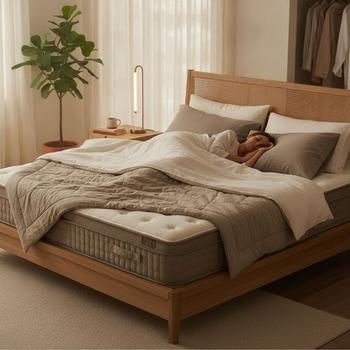
Comfort is rarely about choosing the softest bed in the room. It comes from finding tailored support that matches the way your body rests through the night. A mattress that feels inviting for a side sleeper may leave a back sleeper unsupported, while a firmer build that suits one person can create pressure for another. That is why a sleep style mattress matters more than a generic firmness label.
When support matches sleep habits, the body can settle into a more neutral posture. Hips, shoulders, and lower back are held in better alignment, which often means fewer position changes and less morning stiffness. Carter & Lewis highlights this balance well through handcrafted construction, pressure relief, pocket spring support, and custom firmness options designed around how people actually sleep.
Good sleep starts when your mattress responds to your body instead of forcing your body to adapt
For many households, the right fit comes down to a few practical questions:
Answering those questions makes it easier to choose a mattress that feels personal, not just standard.
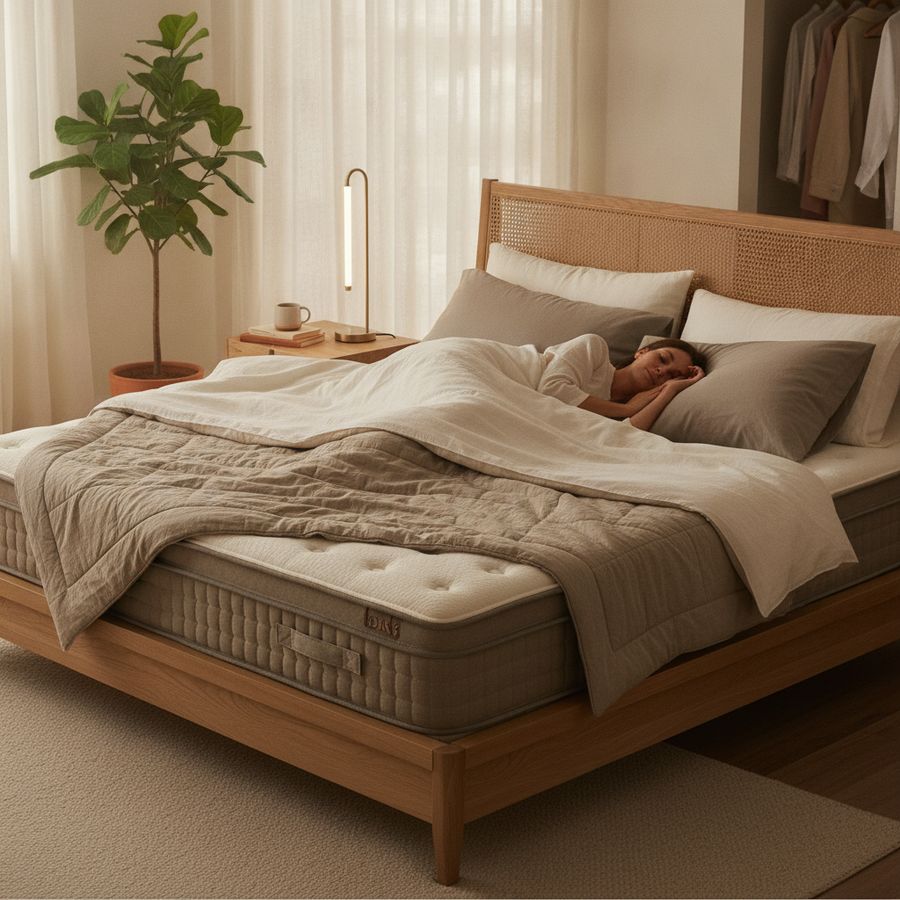
Custom mattress firmness changes more than the first impression when you lie down. It affects how deeply your body settles, how evenly weight is distributed, and how well the mattress supports natural spinal alignment. In practical terms, firmness influences whether your shoulders are cushioned, whether your hips stay level, and whether your lower back feels held up or left to sink.
This is why two mattresses with similar materials can feel completely different in use. The internal tension of springs, the density of comfort layers, and the way those layers interact all shape the final experience. At Carter & Lewis, the emphasis on hand-tufted craftsmanship, premium fillings, and modern support technology shows how firmness is part of a bigger sleep system rather than a simple soft-versus-firm choice.
Customisation often improves three key areas:
For shoppers comparing options, the real benefit is clarity. Instead of guessing from a showroom label, you choose a firmness level that suits your body type and sleep position. That makes the mattress feel more intuitive from the first night and more comfortable over the long term.
A true side sleeper mattress should do two things at once: cushion the shoulders and hips while still supporting the waist. That balance is essential because side sleeping creates sharper pressure points than other positions. If the surface is too firm, the shoulders can feel compressed. If it is too soft, the spine may bow out of alignment.
Pressure relief matters because the shoulder takes much of the body’s contact with the mattress. A well-chosen comfort layer can reduce that concentrated force and help muscles stay more relaxed overnight. Materials such as memory foam, responsive comfort layers, and well-zoned pocket spring systems often work well for side sleepers because they contour without collapsing.
Side sleepers usually sleep best when the mattress gives gently at the shoulders but stays supportive through the middle
Useful signs that a side sleeper may need a different firmness include:
For many people, custom firmness is the difference between simple softness and tailored support. The goal is not to sink deeply, but to let the shoulder settle just enough for a straighter, more comfortable line from neck to lower back.
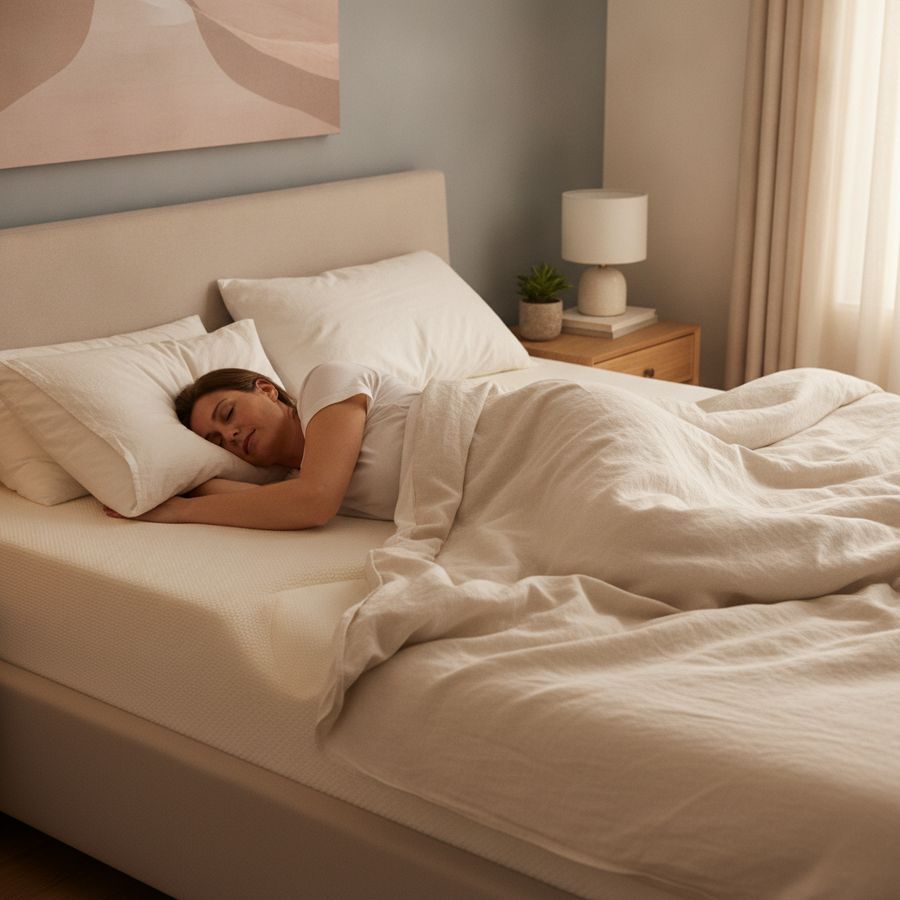
Choosing a back sleeper mattress is usually about keeping the spine supported without making the surface feel uncomfortably rigid. Back sleepers need enough firmness to stop the hips from dipping too far, but also enough comfort to support the natural curve of the lower back. That middle ground often feels balanced rather than extreme.
A mattress that is too soft can allow the pelvis to sink, which may place extra strain on the lumbar area. On the other hand, an overly hard mattress may leave the lower back under-supported because it does not contour enough to meet the body. This is where custom firmness becomes useful, especially for people who want a steadier feel but still need a touch of pressure relief.
Back sleepers can narrow the choice by focusing on these factors:
Carter & Lewis mattresses often combine orthopaedic support, pocket springs, and breathable fillings, which suits this kind of balanced need. For most back sleepers, the best option is not simply “firm.” It is a mattress that feels stable, supportive, and comfortable across the full length of the body.
Firmness labels are helpful starting points, but they do not tell the whole story. One of the biggest reasons is body weight. A mattress described as medium-firm may feel plush to a lighter sleeper and much firmer or less supportive to someone heavier. That difference happens because weight changes how deeply the body engages with springs and comfort layers.
Lighter sleepers often need a little more surface give to experience proper contouring. Heavier sleepers may need stronger support so the hips and torso do not sink excessively. This is why custom mattress firmness can be more reliable than choosing by label alone. It allows the mattress to be tuned to real-world use rather than broad marketing categories.
The same mattress can feel completely different depending on who is sleeping on it
Body weight commonly affects:
When shopping for a sleep style mattress, it helps to think about firmness, body shape, and materials together. A well-made handcrafted mattress with responsive support and premium fillings can feel far more personalised when those factors are considered as part of the decision.
In most cases, one firmness does not suit every sleeper equally well. People differ in sleep position, body weight, pressure points, and comfort preference, so a single feel inevitably asks someone to compromise. A couple may both enjoy the same mattress quality, for example, but one person may need deeper cushioning while the other wants firmer support through the lower back.
That does not mean a shared mattress cannot work. It means the best result usually comes from a design that balances comfort carefully or offers some form of customisation. Carter & Lewis emphasises comfort tailored to how you sleep, which reflects a more realistic approach than assuming one standard tension fits everyone.
A universal firmness is especially difficult when sleepers fall into different categories:
The better question is not whether one firmness can suit everyone, but whether the mattress provides enough adaptability. Materials such as pocket springs, zoned support, and pressure-relieving comfort layers can reduce compromise, but true custom firmness gets closer to a solution that feels right for the individual sleeper.
Tailored tension is one of the clearest ways to make a mattress feel genuinely personal. Instead of settling for a mattress that is almost right, sleepers can choose a support level that reflects their sleep posture, body weight, and comfort preference. That matters because even a high-quality mattress can disappoint if the tension is wrong for the person using it.
For couples, tailored tension can be especially valuable. One partner may want more contouring at the shoulders, while the other prefers a steadier surface with firmer back support. A custom approach helps reduce the nightly trade-off between softness and structure. Rather than one person adapting to the mattress, the mattress is selected to suit real needs more closely.
Custom firmness turns mattress shopping from guesswork into fit
This is where tailored support becomes more than a marketing phrase. It means choosing a mattress that supports restful sleep night after night, whether that involves pressure relief, orthopaedic structure, breathable natural fillings, or a more responsive feel. Handcrafted options with quality spring systems and thoughtful comfort layers can make that adjustment feel refined rather than complicated.
When bedtime stops feeling like a compromise, the benefits often show up quickly: fewer aches, easier settling, and a more restorative night’s sleep. That is the real value of choosing firmness around the sleeper, not the label.
When comparing foam vs natural materials for a cooling mattress , it helps to look beyond the top comfort layer. Heat build-up...
13 Oct 2026 · 8 min read Read →
When comparing spring mattress types , the spring unit underneath the comfort layers is what shapes the overall sleep experience. It influences...
9 Oct 2026 · 5 min read Read →
A mattress does not wear out all at once. It changes gradually through thousands of nights of pressure, movement, temperature shifts, and...
9 Oct 2026 · 7 min read Read →
Answer a few quick questions and we'll match you — or come and try every firmness at our Liversedge showroom.

