

Natural Fillings vs Foam for Night Sweat Relief
When comparing foam vs natural materials for a cooling mattress , it helps to look beyond the top comfort layer. Heat build-up...
13 Oct 2026 · 8 min read Read →

 Visit our ShowroomHolme Street, Liversedge WF15 6JB · Tel. 0743 8105145Plan your visit →
Sleep guides & journal

When comparing spring mattress types, the spring unit underneath the comfort layers is what shapes the overall sleep experience. It influences whether a mattress feels gently responsive, firmly supportive, or more traditional in its bounce. It also affects airflow, edge consistency, and how well the surface stays level over time.
Pocket springs usually feel more tailored because each spring responds on its own. Bonnell and open coil systems create a more connected feel, which many sleepers describe as stable and straightforward. For warmer nights, an open spring structure can also encourage good air circulation through the mattress core.
The spring system is not just the support base — it is the foundation of comfort, breathability, and long-term mattress support
That is why choosing between pocket springs, open coil, and Bonnell should always start with how you want the bed to feel night after night.

The main difference in pocket springs vs Bonnell comes down to how the springs react under pressure. Pocket springs sit in individual fabric pockets, so they compress more independently. Bonnell springs are hourglass-shaped and linked together, creating a more uniform, interconnected response across the mattress.
For many people, pocket springs feel more adaptive around the shoulders, hips, and lower back. Bonnell systems often feel firmer and more traditional, which can suit sleepers who prefer a stronger, flatter surface. Carter & Lewis reflects this distinction well, with mattresses like the Memory Plus Pocket offering targeted response, while orthopaedic Bonnell designs provide dependable, balanced support.
Pocket springs: tailored contouring and reduced partner disturbance
Bonnell springs: classic support, often at a lower price point
Both: can deliver solid mattress support when well built
The better choice depends less on trend and more on your sleeping habits and comfort priorities.
An open coil mattress typically uses a connected spring structure that delivers a firmer, more even feel. Because the springs work together, the sleep surface often feels supportive and straightforward rather than deeply contouring. For shoppers who want reliable comfort without moving into premium price brackets, this style remains a practical option.
Open coil mattresses can work especially well in guest rooms, children’s rooms, or main bedrooms where a sleeper prefers a sturdier, more traditional sensation. The connected design also allows generous airflow through the core, which can help create a fresher sleeping environment.
Open coil mattresses are often chosen not because they are basic, but because they offer honest support and value
Models such as the Carter & Lewis Forrest Mattress show how this design can still feel considered and comfortable, especially for those drawn to a semi-orthopaedic, firmer sleeping surface.
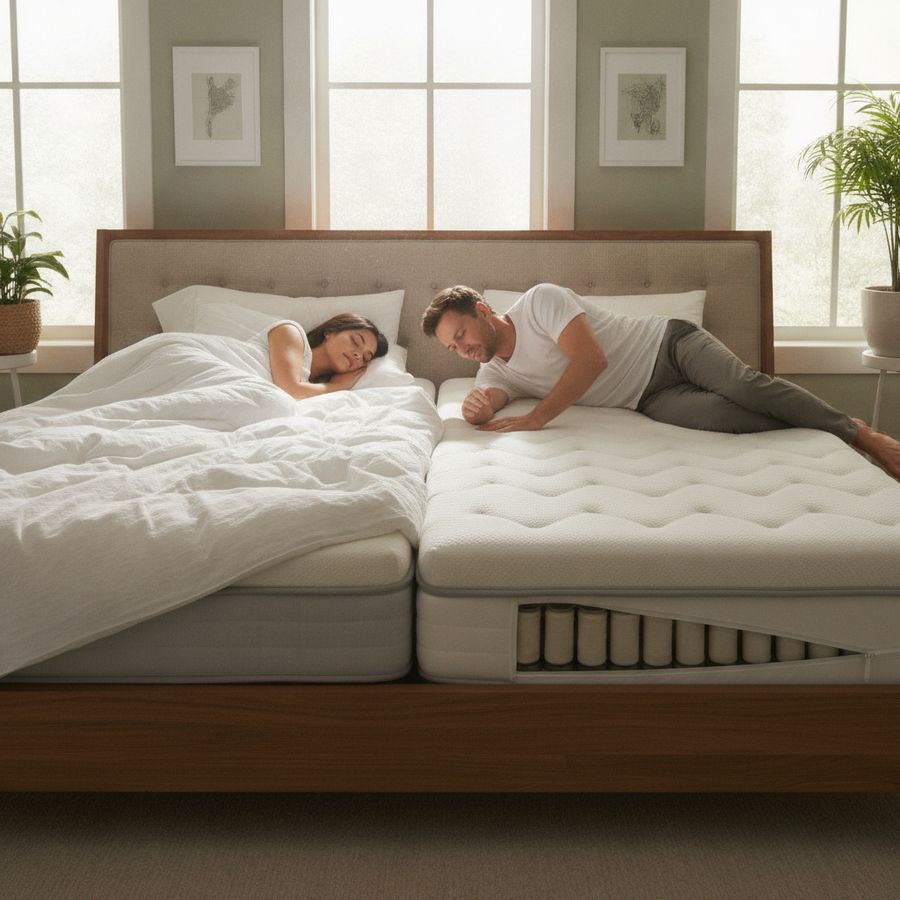
If you share a bed, motion isolation mattress performance quickly becomes important. Motion isolation refers to how well a mattress limits movement from travelling across the surface when a partner turns, gets up, or changes position during the night.
In most cases, pocket springs perform best because each spring moves more independently. That means pressure stays more localised instead of rippling through the whole mattress. Bonnell and open coil systems, by contrast, are linked together, so they usually transfer more movement from one side to the other.
This does not make connected springs poor quality; it simply means they suit different priorities. If uninterrupted sleep with a partner is high on your list, pocket models like the Ernest, Clayton, or Gravity Cell are often the stronger choice.
Best for couples: pocket springs
Best for traditional bounce: Bonnell or open coil
Best overall for movement control: individually responsive spring units
It is easy to assume that one spring type automatically offers better mattress support than another, but support depends on more than the category alone. Spring tension, spring count, edge construction, fillings, and hand-finished build quality all influence how the mattress performs over time.
For example, a well-made 1000 pocket spring mattress can feel more refined than a lower-spec alternative, but a sturdy Bonnell model with quality upholstery may still provide excellent support for the right sleeper. Higher counts can improve responsiveness, yet only when paired with thoughtful design and durable materials.
Good support is not created by labels alone — it comes from the full mattress build working together
Carter & Lewis highlights this well across its range, from firmer orthopaedic Bonnell options to premium pocket spring mattresses with wool, cotton, cashmere, and edge-to-edge stability features. Construction quality is what turns a spring unit into lasting comfort.
The ideal selection among spring mattress types depends on how your body interacts with the mattress. Side sleepers typically benefit from the adaptive nature of pocket springs, providing cushioning for pressure points while maintaining proper alignment. Back sleepers may prefer either pocket or firmer Bonnell systems, based on their preference for contouring or a flatter feel.
Heavier sleepers often appreciate stronger tension and robust support layers, while lighter individuals might find very firm connected springs less accommodating. Front sleepers generally do better with a steady, firmer surface that prevents the hips from sinking too much.
Side sleepers: usually favor pocket spring contouring
Back sleepers: often suit balanced pocket or Bonnell support
Front sleepers: commonly prefer firmer support
Couples: often benefit from improved motion isolation
In summary, the right spring system is the one that aligns with your shape, sleep position, and personal comfort. For more guidance on choosing the perfect mattress, visit Carter & Lewis.
Pocket springs move more independently because each spring is wrapped separately, so they usually feel more adaptive and better at limiting partner disturbance. Bonnell springs are linked together, so they create a more uniform, traditional, and often firmer feel across the mattress.
Yes, open coil mattresses can be a practical everyday option for sleepers who prefer a firmer, more straightforward feel. They are often chosen for value, airflow, and reliable support rather than deep contouring.
Pocket spring mattresses are usually the best choice for couples because their individually responsive springs help reduce motion transfer. That means one partner is less likely to feel the other's movements during the night.
No, spring count alone does not guarantee better support. Support also depends on spring tension, edge construction, comfort fillings, and the overall build quality of the mattress.
Side sleepers often prefer pocket springs for pressure relief and contouring, while front sleepers usually benefit from firmer support. Back sleepers can suit either pocket or Bonnell systems depending on whether they prefer a more cushioned or flatter sleeping surface.
When comparing foam vs natural materials for a cooling mattress , it helps to look beyond the top comfort layer. Heat build-up...
13 Oct 2026 · 8 min read Read →
A mattress does not wear out all at once. It changes gradually through thousands of nights of pressure, movement, temperature shifts, and...
9 Oct 2026 · 7 min read Read →
Good sleep support is not simply about choosing a mattress that feels soft or firm at first touch. The real difference comes...
9 Oct 2026 · 9 min read Read →
Answer a few quick questions and we'll match you — or come and try every firmness at our Liversedge showroom.

