

Natural Fillings vs Foam for Night Sweat Relief
When comparing foam vs natural materials for a cooling mattress , it helps to look beyond the top comfort layer. Heat build-up...
13 Oct 2026 · 8 min read Read →

 Visit our ShowroomHolme Street, Liversedge WF15 6JB · Tel. 0743 8105145Plan your visit →
Sleep guides & journal

When you choose mattress firmness, the best starting point is not a simple soft-to-firm chart. A mattress has to work with your body build, your usual sleeping posture, and your comfort preference at the same time. A lighter sleeper may find a medium mattress supportive, while a heavier sleeper can experience that same surface as much softer because they sink further into the comfort layers.
Your sleep style firmness choice should also support healthy alignment. Side sleepers often need more cushioning around the shoulders and hips, while back and combination sleepers usually benefit from a steadier balance of contouring and lift. Personal preference still matters too. Some people simply rest better on a gently cushioned surface, while others prefer a flatter, firmer feel.
The right firmness is the one that keeps your spine aligned while still feeling comfortable enough to settle into night after night
That is why a well-made mattress with responsive springs, breathable natural fillings, and carefully built comfort layers can feel more supportive than a mattress that is merely labelled firm.
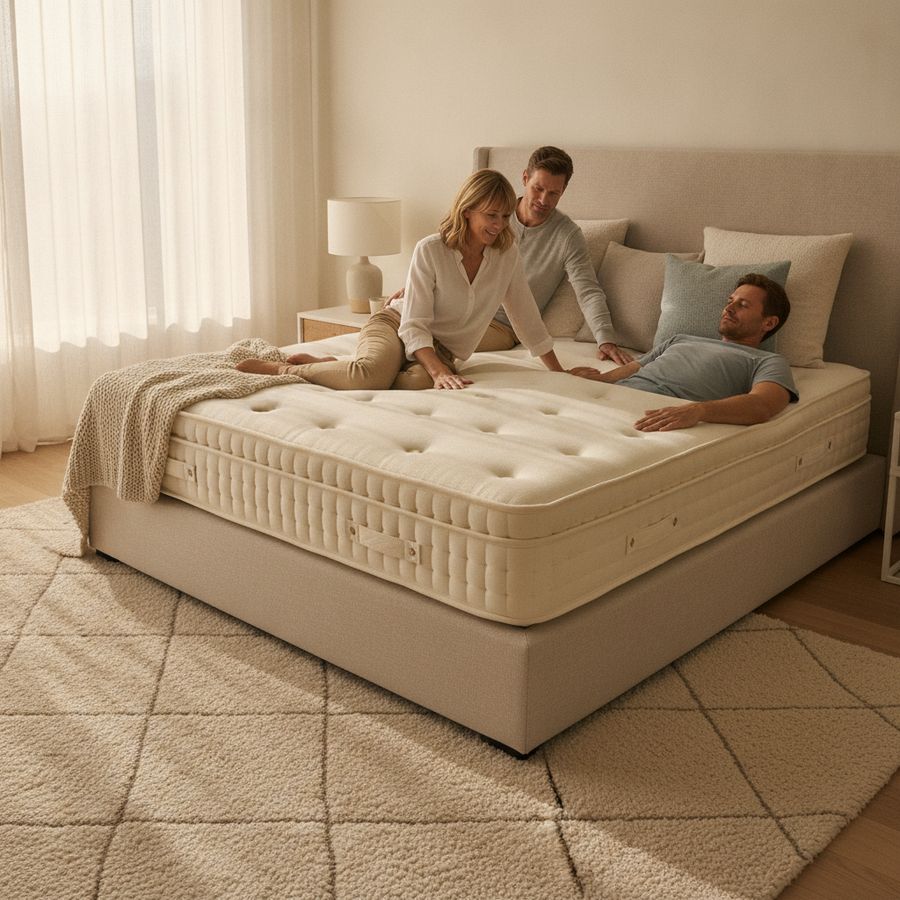
For many people, the ideal side sleeper mattress sits in the medium to medium-firm range, but the label alone is not enough. Side sleeping places more direct pressure on the shoulders and hips, so the mattress should allow these areas to sink slightly while keeping the waist and lower back supported. If the surface feels too hard, you may wake with numb arms, sore hips, or stiffness across the shoulders.
A supportive side sleeping setup usually combines pressure relief with structure underneath. Pocket springs, adaptive comfort layers, and breathable fillings can help create that balance. For sleepers who move between side and back positions, a medium-firm feel often works especially well because it cushions the curves of the body without letting the spine dip out of line.
Choose more cushioning if you have sharp pressure points at the shoulders or hips
Choose more support if your midsection sinks too deeply
Look for comfort layers that contour without trapping you in one position
In short, the best side sleeper mattress should feel gently accommodating on top and reliably supportive underneath.
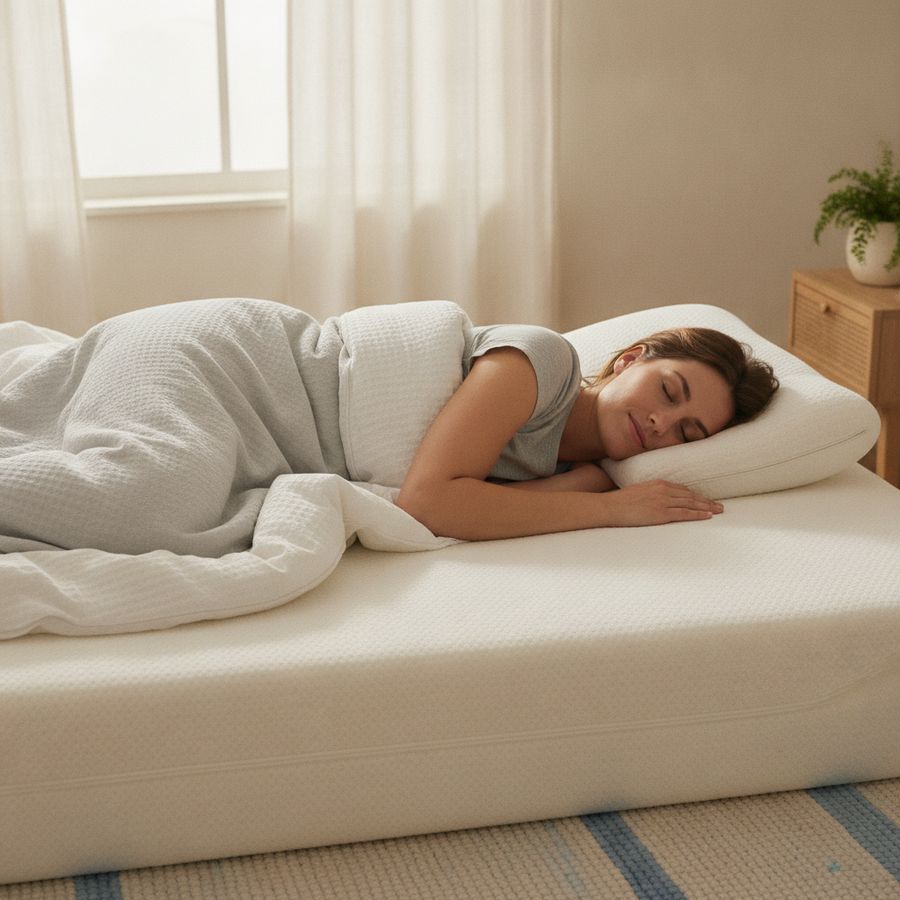
Back sleepers typically do best on a mattress that feels balanced rather than extreme. Too soft, and the hips can drop lower than the chest, placing strain on the lumbar area. Too firm, and the natural inward curve of the lower back may not be properly supported. This is why many back sleepers prefer a medium-firm to firm feel with responsive support through the centre third of the mattress.
When evaluating sleep style firmness, focus on whether your spine stays in a neutral line while you are lying flat. The mattress should support the pelvis, fill in the lower back gently, and still provide enough comfort for the shoulders. Quality support systems such as pocket springs or zoned designs can be especially useful because they deliver steadier resistance exactly where the body is heaviest.
Balanced lumbar support is not about sleeping on the hardest bed possible; it is about keeping the lower back stable without creating pressure elsewhere
If you wake with aching across the waist or tension through the mid-back, your current firmness may be out of step with the way you sleep.
Body weight support is one of the most overlooked parts of mattress shopping. The same mattress can feel plush to one sleeper, balanced to another, and overly firm to someone lighter. That happens because weight affects how deeply the body compresses the comfort layers and engages the support core underneath.
Lighter sleepers often need a slightly softer feel to get enough contouring at the shoulders, hips, and lower back. Average-weight sleepers usually have the widest comfort range and can often choose based on sleep position and preference. Heavier sleepers commonly need stronger body weight support so they do not sink too far, especially around the hips and torso. In those cases, denser fillings, stronger spring systems, and firmer tension can improve alignment and durability.
Under lighter loads, firm mattresses may feel harder than expected
Under greater loads, medium mattresses can feel softer than advertised
Support materials matter as much as the firmness rating
Understanding this makes it much easier to choose mattress firmness that feels right in real life, not just on paper.
Many shoppers begin with a firmness label, but real comfort depends on how well the mattress relieves pressure while supporting the spine. A mattress marked firm can still feel comfortable if its top layers cushion sensitive areas. Likewise, a mattress labelled medium may still create discomfort if it lacks enough give where your body presses hardest.
This matters most for side sleepers, people with joint sensitivity, and anyone who wakes with pain in the shoulders, hips, or lower back. Effective pressure relief comes from the interaction between the support core and the surface materials. Memory foam, natural fibres, latex blends, and responsive spring systems can all contribute when they are properly layered.
A good mattress does more than fit a firmness category; it distributes weight evenly so no single area carries too much stress
When comparing options, think beyond soft, medium, or firm. Ask whether the bed keeps you lifted, cushions the points of contact, and allows easy movement. In many cases, that combination will deliver better sleep than chasing a label alone, especially when matching a side sleeper mattress or support-focused build to individual needs.
For some sleepers, standard firmness levels are close but not quite right. That is where custom tension can make a meaningful difference. Instead of trying to adapt your body to a generic feel, a custom approach fine-tunes the mattress around your weight distribution, sleeping posture, and comfort preference. This can be especially helpful for couples with different builds or for people dealing with recurring back or hip discomfort.
Long-term comfort depends on consistent support night after night, not just on how a mattress feels during the first few minutes. A mattress with custom tension can help maintain alignment more accurately because the support is chosen with your real needs in mind. This is particularly valuable in handcrafted designs where materials, spring tension, and comfort layers can work together more precisely.
Useful for sleepers between standard firmness categories
Helpful for couples with different support needs
Can improve comfort retention over years of use
If you have struggled to find the right balance, a tailored firmness option may be the smartest way to choose mattress firmness with confidence.
A mattress that is too firm does not always feel obviously uncomfortable at first. In fact, some people mistake a hard surface for better support. Over time, though, the signs become clearer. Common clues include waking with shoulder soreness, hip pain, numb arms, tingling hands, or stiffness that eases once you have been moving for a while. These symptoms often point to poor pressure distribution rather than proper support.
You may also notice that you struggle to settle into one position, particularly if you sleep on your side. When the mattress does not allow enough contouring, the body cannot relax fully. The result can be restless sleep, frequent turning, and tension across the neck or lower back. Lighter sleepers experience this more often because they do not sink deeply enough to reach the mattress’s comfort layers.
If your mattress feels supportive but your joints and pressure points complain every morning, it may be firmer than your body needs
The solution isn’t always about selecting the softest model. It’s about identifying a surface that offers better pressure relief, enhanced alignment, and the appropriate sleep style firmness for your body type.
Start with your main sleep posture. Side sleepers usually need more cushioning at the shoulders and hips, back sleepers often need medium-firm to firm support for the lumbar area, and combination sleepers typically do well with a balanced feel that allows movement without losing alignment.
Yes. Lighter sleepers usually experience the same mattress as firmer because they compress the comfort layers less, while heavier sleepers often find it softer because they sink deeper into the bed and engage more of the support core.
Common signs include shoulder or hip soreness, numb arms, tingling hands, stiffness in the morning, and difficulty settling into a comfortable position. These symptoms often mean the mattress is not relieving pressure well enough for your body.
Not necessarily. Better support comes from keeping the spine in a neutral position while still cushioning pressure points. A mattress that is too firm can leave gaps under the lower back or create tension at the shoulders and hips.
Custom tension is useful when standard soft, medium, or firm options do not feel quite right. It can be especially helpful for couples with different body types, sleepers between firmness categories, or people with recurring back or hip discomfort.
When comparing foam vs natural materials for a cooling mattress , it helps to look beyond the top comfort layer. Heat build-up...
13 Oct 2026 · 8 min read Read →
When comparing spring mattress types , the spring unit underneath the comfort layers is what shapes the overall sleep experience. It influences...
9 Oct 2026 · 5 min read Read →
A mattress does not wear out all at once. It changes gradually through thousands of nights of pressure, movement, temperature shifts, and...
9 Oct 2026 · 7 min read Read →
Answer a few quick questions and we'll match you — or come and try every firmness at our Liversedge showroom.

